CAREERS & JOBS
How to Become a Civil Engineering Draftsperson in Australia (Degree Not Required — a Diploma Is)
Every road, bridge, subdivision, train station and data centre starts as a technical drawing and someone has to draw it. If you like the idea of turning an engineer's concept into the precise plans a construction crew builds from, here is the realistic path to getting there in Australia, step by step.
Step 1: Understand the role
A civil engineering draftsperson (ANZSCO 312211) prepares detailed drawings and plans for civil engineering projects — roads, drainage, earthworks and subdivisions, and the civil and structural packages that sit under buildings and major infrastructure, working alongside professional engineers. You are the bridge between the design concept and the construction site. It is precise, technical work, done almost entirely in CAD software, and it is in steady demand wherever infrastructure is being built.
Step 2: Get the right qualification — not a degree
This is the part most people get wrong: you do not need a four-year engineering degree — but you do need a formal qualification. The Australian qualification listed for this occupation is a Diploma or Advanced Diploma: a nationally recognised vocational pathway that is shorter and more practical than university, not a shortcut around study. The RII60520 Advanced Diploma of Civil Construction Design is a nationally recognised qualification at exactly that level, and it can be studied 100% online — live classes run Thursday evenings and weekend afternoons, so most students keep working full-time while they study.
Step 3: Learn the software employers actually list
Scan any draftsperson job ad and two names appear again and again: AutoCADand Revit. Fluency in these is the clearest separator between candidates — and a big driver of pay, as we covered in our 2026 salary guide. At Pegasus, access to both is included in the course at no extra cost, and you learn them on real project-style drawings, not toy exercises.
Step 4: Build a small portfolio before you finish
Your course drawings are your first portfolio. Keep your best work — a road design, a drainage layout, a set of compliant documentation — and you will walk into interviews with something concrete to show. Our careers support includes resume help and mock interviews, so the jump from student to employee is a planned step, not a leap.
Step 5: Apply where the work is
Engineering consultancies, civil contractors, councils and utilities all employ draftspersons. Sydney, Melbourne and Brisbane carry the deepest project pipelines, but the work is national — and because drafting is computer-based, hybrid and remote arrangements are increasingly common.
How long does it all take?
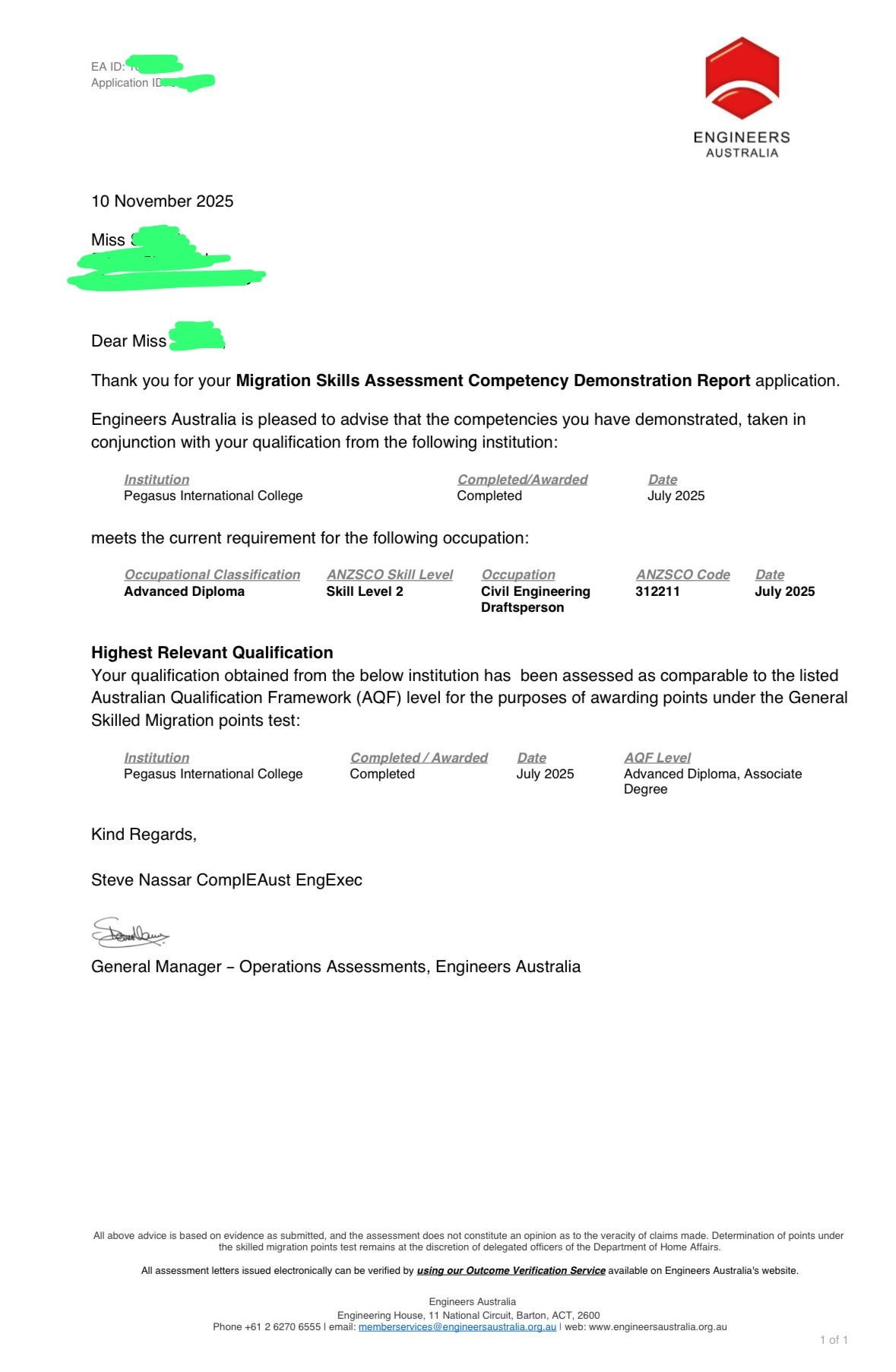
The Advanced Diploma is offered with 1-year and 2-year study options. Many students are job-ready in the software well before graduating — and if you are pursuing a skills assessment as a Civil Engineering Draftsperson, this qualification sits at the right AQF level: one of our graduates recently received a positive skills assessment.
Ready to start? See how to enrol in five easy steps or email Admin@Pegasus.edu.au · 1300 019 535 · RTO Code 46222.
Civil and structural — and how the structural side differs
Civil drafting covers the ground a project sits on roads, drainage, earthworks, site levels, and in the industry you'll see it drafted in AutoCAD, 12d or Civil 3D depending on the firm. Structural drafting covers what gets built on top of it - the building itself, its frame, floors and connections, and Revit is the preferred tool there. They are related disciplines, but distinct specialisations with their own software, project types and career paths.
The structural side is a career in itself. Buildings, stadiums, train stations and the data centres now being built across Sydney and Melbourne all need detailed structural drawings before construction starts — steel and concrete framing, floor plans, connection details, all coordinated in Revit. It is precise, technical work, and demand for it is strong wherever a build is going up, not just where land is being developed.
Pegasus teaches AutoCAD and Revit — the core tools behind both sides of the industry — so whichever direction you head, that is the fluency employers are screening for.
Can you land a job without the qualification?
You might. Every so often, you could get a call for an interview for a role you applied to on Seek, Indeed or LinkedIn — and sometimes, even an offer. If that is you, good news — genuinely, that is hard work paying off, and the first job is never easy to land. But it is a rare door, and you cannot plan a career on the chance it opens.
What the qualification changes is your odds of getting that first interview, and that first job. When a consultancy opens a trainee or junior drafting role, their shortlist is, by default, built from people who can show their commitment to this industry and are serious about it as a career. This qualification is how you show that to an interviewer — that you have studied, that you are at the right AQF level, and that you have real project-style drawings and working AutoCAD and Revit skills to back it up. Next to a candidate with nothing to show, that is the difference between being read and being skipped.
The Advanced Diploma of Civil Construction Design teaches these skills 100% online with live classes — AutoCAD and Revit included. See how to enrol in five easy steps, or call 1300 019 535.
FAQ
Can I become a draftsperson without any construction experience?
Yes — the course starts from zero. Many of our students come from business, finance, hospitality and retail backgrounds.
Is drafting a good career for career changers?
It is one of the most accessible technical careers in construction: no degree, no physical site work required, and clear salary progression once you are fluent in AutoCAD and Revit.
Can I study from outside Australia?
The course is delivered 100% online with live classes via MS Teams — contact us to confirm eligibility for your situation.
Can I get a drafting job without the diploma?
Occasionally, yes — it happens, usually through a call-back on a job you applied for on Seek, Indeed or LinkedIn. It is uncommon. For most people, the qualification is what gets them onto the shortlist for trainee and junior roles in the first place.